
Families often leave good sessions with bad home plans.
The advice may be technically correct. But it lands inside real life:
- work
- siblings
- school runs
- meals
- sleep issues
- simple human exhaustion
That is why home carryover often collapses even when motivation is high.
Home is not a second clinic
This is the first rule.
Home should support development. It should not feel like one endless test.
Children need teaching and repetition, but they also need comfort, recovery, and ordinary family life. When every moment becomes correction and demand, two things usually happen:
- the child starts avoiding the adult more
- the adult starts dreading the plan
That is not strong carryover. It is weak design.
Micro-routines beat marathon sessions
The most sustainable home practice is usually:
- short
- predictable
- easy to repeat
- tied to routines the family already has
Examples include:
- asking for a snack before it is opened
- saying help before the adult steps in
- pausing in a bedtime book for one repeated word
- carrying one item during cleanup
- practicing one transition cue before leaving the house
These moments are small by design. That is why they survive.
Use routines that already exist
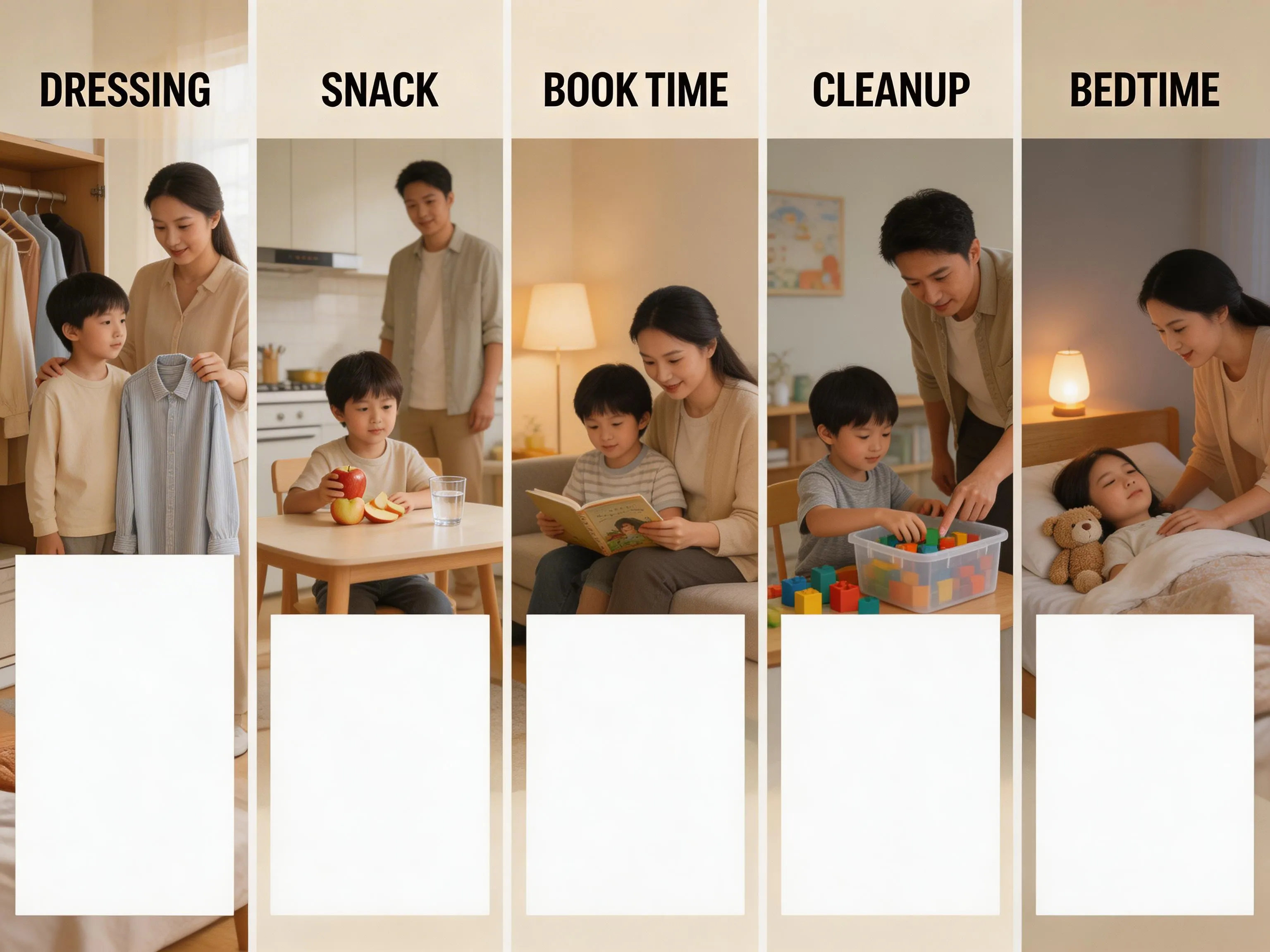
Good home practice often lives inside:
- breakfast
- dressing
- bath
- snack
- cleanup
- getting into the car
- bedtime
For older children, the same principle applies to bags, drinks, errands, schedules, chores, and simple cooking steps.
The point is not to create an artificial therapy block for every skill. The point is to improve the teaching value of routines that already belong to the family.
Better timing beats more talking
Adults often assume helping more means saying more. Usually it means timing language better.
Good home support often looks like:
- noticing what the child is already focused on
- joining that focus
- using shorter, usable language
- expanding a little
- pausing
That pattern creates less friction than dragging the child into a brand-new lesson every few minutes.
A sustainable plan is a serious plan
The best home plan is not the one that sounds heroic. It is the one the family can still implement next week with enough consistency to matter.
That is why micro-routines often outperform ambitious systems built on exhaustion.
Read next
If routines themselves are the biggest problem, read Transitions and Routines in Autism.
If you want the broader family-implementation framework, continue into the book.