
AAC is one of the most misunderstood tools in autism support. Many parents hear about it only as a last resort — something to try after speech therapy has been exhausted. This framing causes real harm, because it delays functional communication during the period when the brain is most receptive to building it.
This guide covers what AAC actually is, how to decide whether your child needs it, how to choose between systems, and what the research says about its relationship to speech development.
What AAC actually is
AAC stands for Augmentative and Alternative Communication. It refers to any method of communication that supplements or replaces spoken language. The word “augmentative” is key — AAC is not about giving up on speech. It is about giving a child a way to communicate while speech continues to develop.
AAC comes in many forms:
Unaided AAC requires no external tools:
- Sign language or simplified signs
- Gestures and body language systems
Low-tech aided AAC uses physical materials:
- Picture Exchange Communication System (PECS)
- Communication boards with symbols or words
- Visual schedules that support requesting and choice-making
High-tech aided AAC uses electronic devices:
- Tablet-based apps (Proloquo2Go, TouchChat, LAMP Words for Life)
- Dedicated speech-generating devices
- Eye-gaze systems for children with motor challenges
Most children do not use just one type. A child might use signs at home, a picture board at school, and a tablet app during therapy. The goal is functional communication across contexts, not loyalty to a single system.
When to start AAC
The traditional approach was to establish prerequisites before introducing AAC — the child needed to demonstrate certain cognitive or motor skills first. This approach has been thoroughly discredited by research.
There are no prerequisite skills for AAC. A child does not need to understand cause and effect, match pictures, or demonstrate intent before being given a communication tool. Communication itself teaches these skills. This position is supported by decades of research, including foundational work by Romski and Sevcik (2005) and Kangas and Lloyd (1988), which directly challenged the prerequisites model.
The right question is not “Is my child ready for AAC?” but “Does my child have communication needs that are not being met by their current abilities?”
If a child cannot reliably:
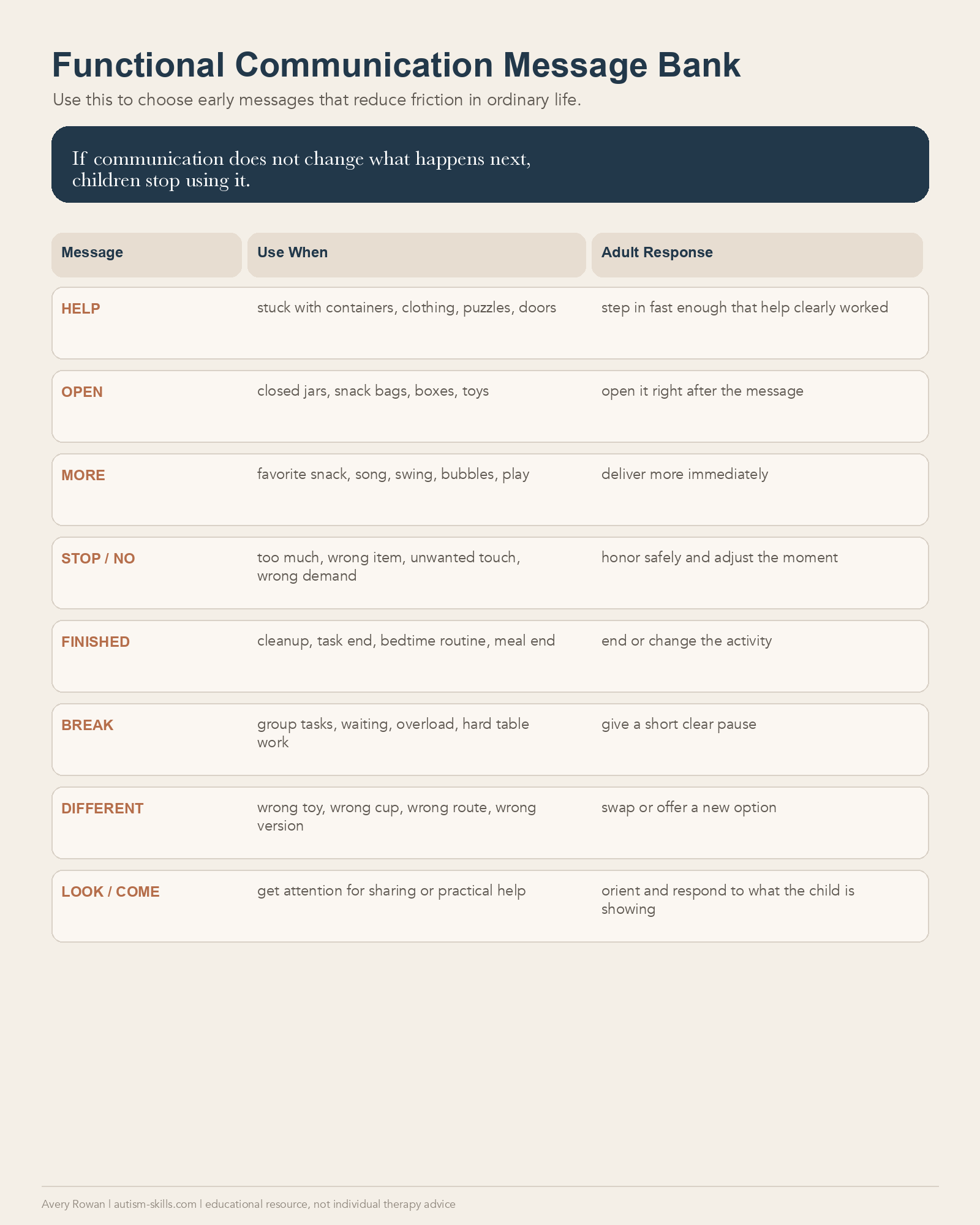
- Request things they want
- Refuse things they do not want
- Get an adult’s attention
- Ask for help
Then they have unmet communication needs, and AAC should be considered — regardless of age, cognitive level, or how much speech they currently have.
The AAC Readiness Is Usually the Wrong Question article breaks down why the readiness framework persists and what to do if a provider uses it to delay access.
How to choose a system
Choosing an AAC system can feel overwhelming because the options are vast and the stakes feel high. But the most important principle is simple: the best system is the one the child can use and that gets responded to consistently.
Start with function, not features
Before comparing devices and apps, ask: what does my child need to communicate right now? If the primary need is requesting preferred items, a simple picture-based system with 5-10 images may be the right starting point. If the child already has some communication but needs more vocabulary, a robust language system on a tablet may be more appropriate.
Low-tech vs. high-tech: a practical comparison
| Factor | Low-Tech | High-Tech |
|---|---|---|
| Cost | Low (printable, homemade) | Higher ($200-$300 for apps, more for dedicated devices) |
| Portability | Excellent — no battery needed | Good, but requires charging |
| Vocabulary size | Limited by physical space | Essentially unlimited |
| Voice output | None | Yes — the device speaks for the child |
| Durability | Can get lost/damaged easily | Protective cases available |
| Learning curve | Low for adults and children | Moderate — requires setup and modeling |
Key principles for choosing
- Do not wait for the “perfect” system. Start with what is available and works. You can always transition later.
- Vocabulary organization matters more than device choice. A well-organized system with core words (want, stop, help, more, go, no) is more useful than a disorganized system with hundreds of nouns.
- The system must be available everywhere. If the AAC system only comes out during therapy, the child cannot communicate in the moments that matter most — meals, play, transitions, distress.
- Model before you expect. Adults need to use the AAC system in front of the child before expecting the child to use it independently. This is called aided language modeling, and it is the single most effective AAC implementation strategy.
Making AAC work in daily life
The most common reason AAC fails is not the wrong device. It is that the system is not consistently available and consistently responded to.
Implementation strategies that matter:
- Keep it present. The AAC system should be within reach during all waking hours — not locked in a therapy bag or available only at the communication table.
- Model constantly. Every time you communicate something the child might want to say, show them how to say it on their system. “You want MORE? Here’s MORE on your talker.”
- Respond immediately. When the child uses the system — even accidentally at first — treat it as communication and respond. This builds the connection between the action and the outcome.
- Expand contexts gradually. Start in highly motivating situations (requesting favorite foods, toys) and expand to less motivating but equally important functions (refusing, asking for help, commenting).
- Include everyone. Siblings, grandparents, teachers, babysitters — everyone who interacts with the child needs basic familiarity with the system.
AAC and speech development
This is the question every parent asks, and the answer is consistent across decades of research: AAC does not prevent speech. In most cases, it supports speech development.
The reasons are straightforward:
- AAC gives children successful communication experiences, which builds the social motivation that drives language development.
- AAC reduces frustration and behavioral escalation, creating a calmer learning environment.
- AAC provides a model — the child hears words (from voice output devices) paired with visual symbols, giving them multiple pathways into language.
- AAC teaches the concept that symbols represent meaning, which is the cognitive foundation for all language — spoken or otherwise.
The research is especially clear for children under 6: early AAC introduction is associated with more spoken language, not less.
For the detailed evidence on this question, Does AAC Stop Speech? covers the research directly.
How the handbook supports AAC decisions
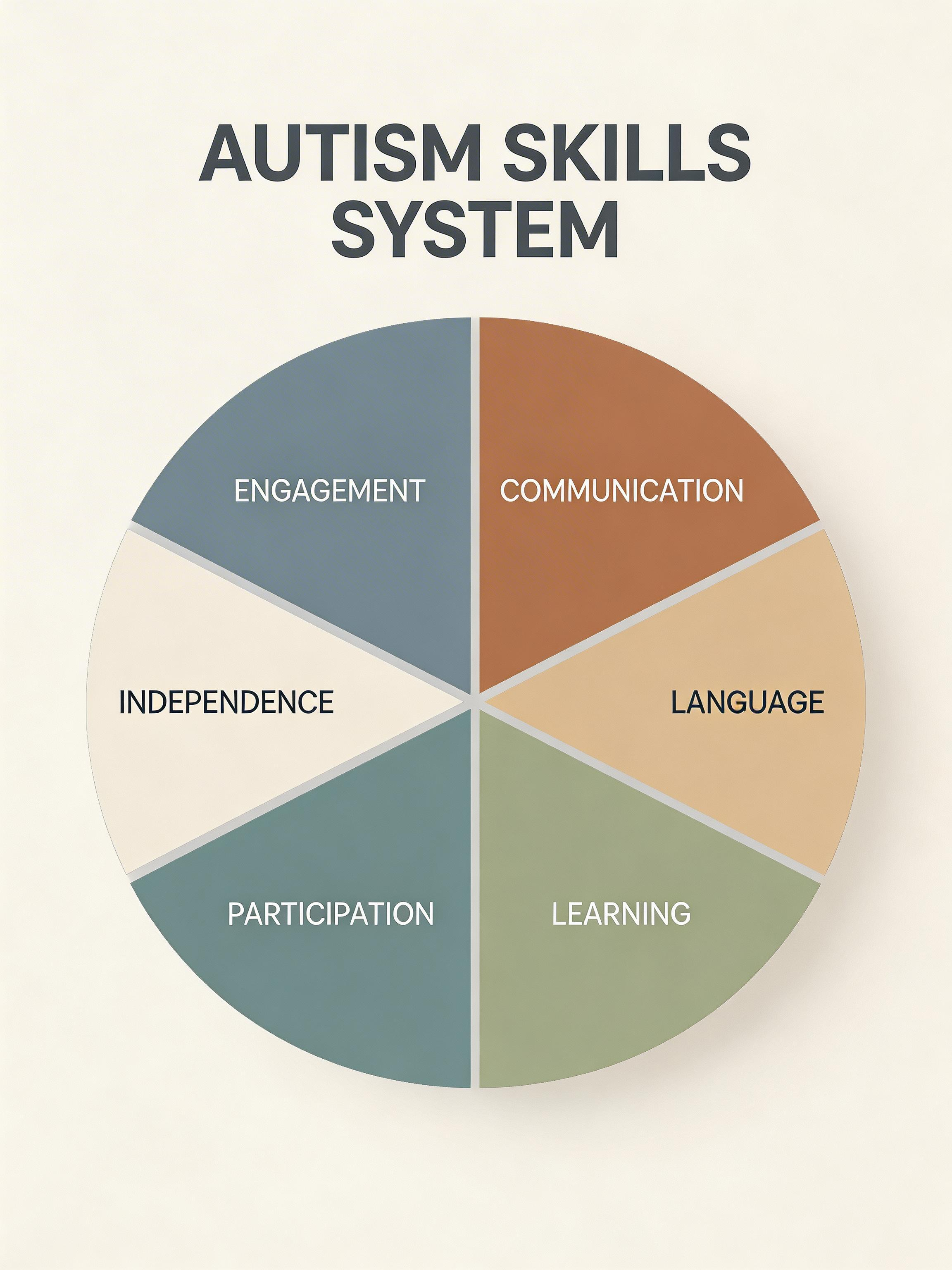
The Autism Skills Handbook devotes three chapters to communication systems, AAC decision-making, and language progression. Chapter 11 covers the logic of when and why to consider AAC. Chapter 12 addresses receptive language — understanding communication, not just producing it. Chapter 13 covers the progression from early messages to more complex language use.
The Communication and AAC Starter Map provides a structured framework for evaluating AAC fit, and the Language Progression Planner helps you track movement from basic functions to richer communication over time.