
Every parent of an autistic child has heard it. Practice at home. Reinforce what therapy teaches. Intensity matters. Carryover is critical.
All of that is true. And all of it can become toxic when it turns “support your child’s development” into “become an unpaid, untrained, always-on therapist.”
Home practice matters. But it has a ceiling. And that ceiling is not where most people think it is.
When home becomes a second clinic
Here is what it looks like when carryover has gone too far:
- Every interaction feels like a teaching opportunity that must not be wasted
- The parent cannot hand the child a snack without turning it into a requesting trial
- Mealtimes, bath time, and bedtime have all become intervention targets
- The child starts avoiding the parent because every interaction brings demands
- The parent feels guilty during any moment that is not “productive”
- Siblings are neglected because the autistic child’s program absorbs all available attention
- The parent is exhausted, resentful, and no longer enjoying any part of the day with their child
This is not a motivation failure. This is a design failure. The plan asked for more than any family can sustain, and nobody adjusted.
What home practice should actually be
Home practice should be:
-
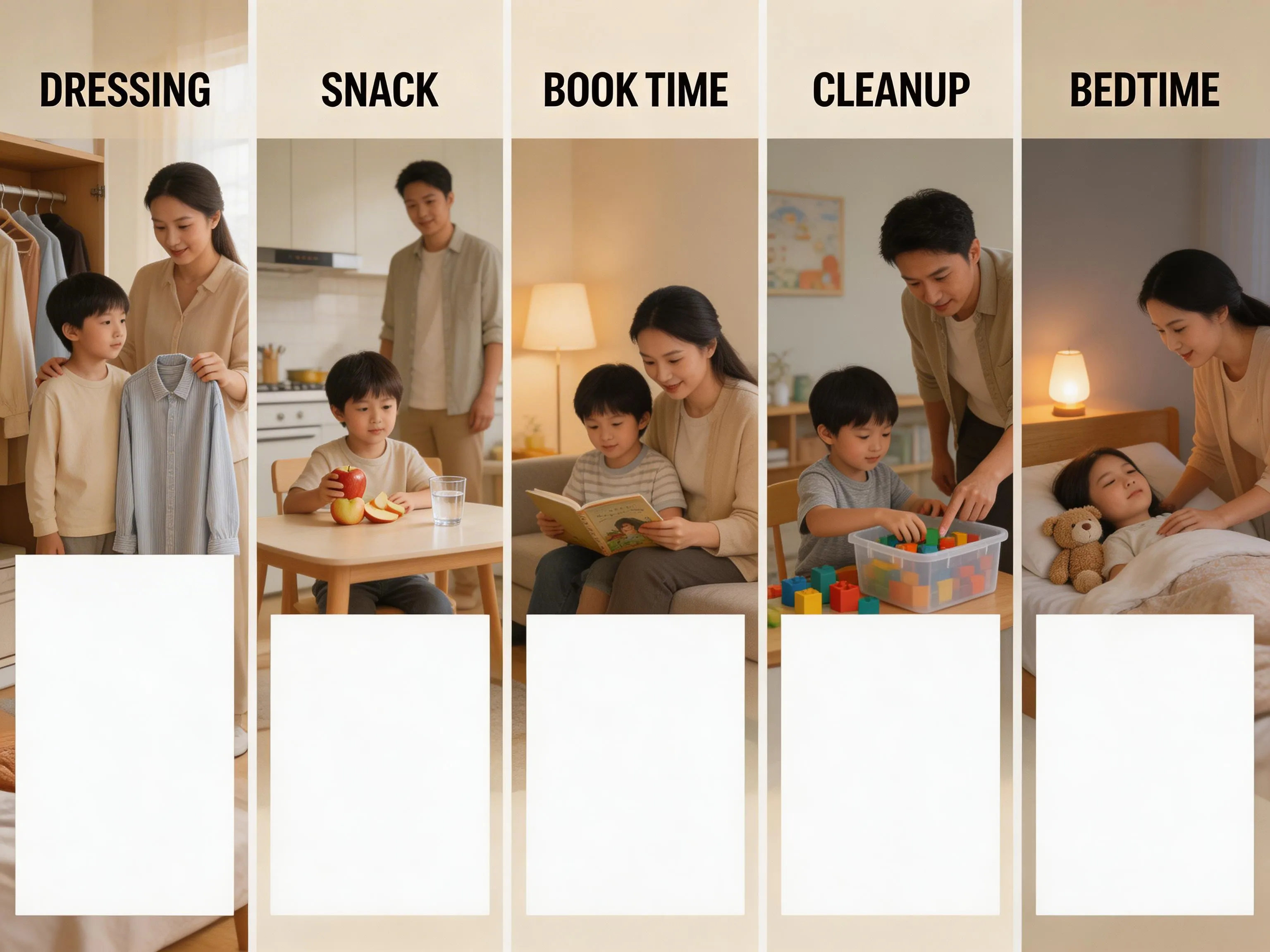
Short. Seconds to minutes, not hours. A requesting moment during snack. Pulling one sleeve during dressing. Saying “help” before an adult steps in. These are micro-routines that fit inside what already happens.
-
Anchored to existing routines. Snack time, getting dressed, leaving the house, bath time, bedtime book. You do not need to create new teaching situations. The day already has them.
-
Focused on one or two targets. Not twelve goals from three professionals. One communication target and one participation target. Maybe one independence target. That is enough.
-
Sustainable on hard days. If the plan only works when everyone slept well, nobody is sick, and the schedule is perfect, it is not a real plan. A real plan has a hard-week version: one routine, one target, minimum viable effort.
-
Enjoyable enough to repeat. If the parent dreads it and the child avoids it, the plan is wrong regardless of how clinically sound it looks. Sustainable practice requires that both people can tolerate the interaction.
The guilt cycle
Guilt drives the overreach. Parents hear that early intervention intensity matters. They hear that the window is closing. They hear that every moment counts.
So they try to teach all day. Every room becomes a therapy room. Every outing becomes a generalization opportunity. Every meltdown becomes a missed teaching moment they should have prevented.
The guilt produces scattered effort, not focused effort. It burns through parent energy without building child skill. And it often damages the relationship — the one thing that makes all the other teaching possible.
The fix is not to stop caring. It is to shrink the target and protect consistency.
What to do instead
Pick one routine. Start with the daily moment that has the most natural teaching potential and the least emotional charge. For many families, snack time works well. It is short, predictable, repeatable, and the child is motivated.
Attach one target. During snack: the child says “open” before the adult opens the container. That is it. That is the whole home practice for this week. Not a program. One embedded target in one routine.
Respond at the right moment. The child reaches for the cracker. Pause. Wait. If the child produces any approximation of the target — a sound, a gesture, a word — respond immediately. The teaching happens in the pause, not in a drill.
Keep it brief. Two to five minutes of intentional practice per routine is enough. More than that and the interaction starts to feel coercive.
Have a hard-week plan. Full version: three routines with one target each. Hard-week version: one routine, one target, two minutes. Bad-week version: just keep the relationship alive. Play. Read a book. Sit together. Do nothing therapeutic and call it success.
What professionals should do differently
If you are a clinician designing home carryover:
Ask what the family can actually do. Not what they should do in an ideal world. What can they do this week, given their sleep, work, other children, health, and emotional state?
Give one thing. Not a binder. Not a sheet of fifteen targets. One clear, specific thing to practice, with a short explanation of what it looks like and what counts as success.
Adjust for capacity. Capacity changes. Broken sleep, work stress, illness, financial pressure, other children — all of these affect what a family can sustain. A plan that ignores capacity is a plan that will fail.
Coach, do not assign. A parent who practices one strategy after watching the therapist model it will outperform a parent who was handed a homework sheet they do not understand.
Review and shrink. If the family reports that the plan is not happening, the first question should not be “why aren’t you doing it?” It should be “what is the smallest version of this that could work?”
The relationship is the infrastructure
A child who trusts the parent, enjoys being near them, and feels safe during interactions will learn more — from everything — than a child who has learned to avoid the parent because every moment is a demand.
Protecting that relationship is not a luxury. It is the infrastructure that makes every other teaching moment possible. When carryover destroys the relationship, it destroys the foundation it was supposed to build on.
Home practice should serve the family, not consume it.
Read next
If you want a practical home routine framework, read Autism Home Practice Without Burnout.
If the bigger challenge is daily routines and transitions, read Transitions and Routines in Autism.
For the full micro-routine system, weekly planner, and hard-week protocol, see the book.