You have too many goals and no clear sequence
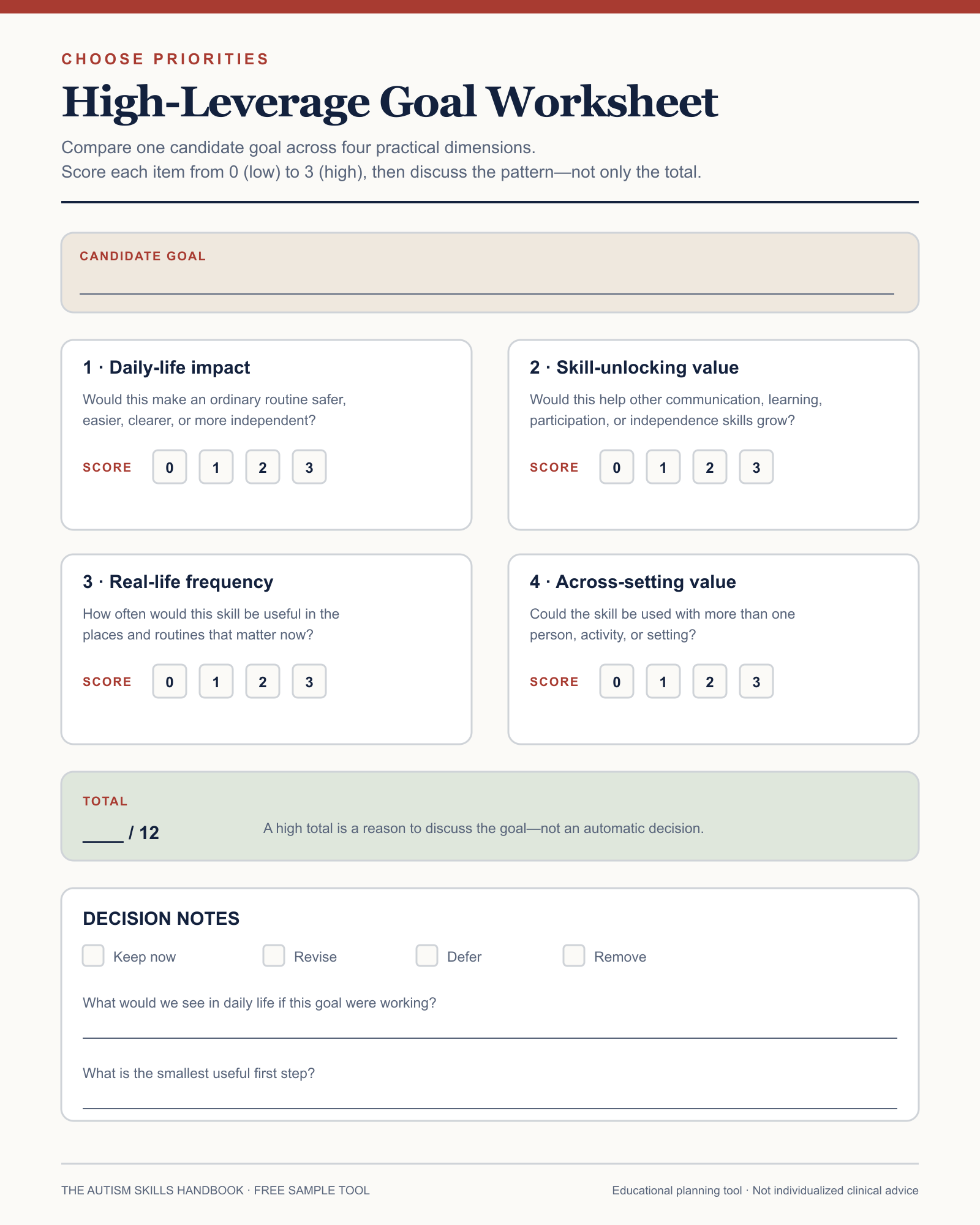
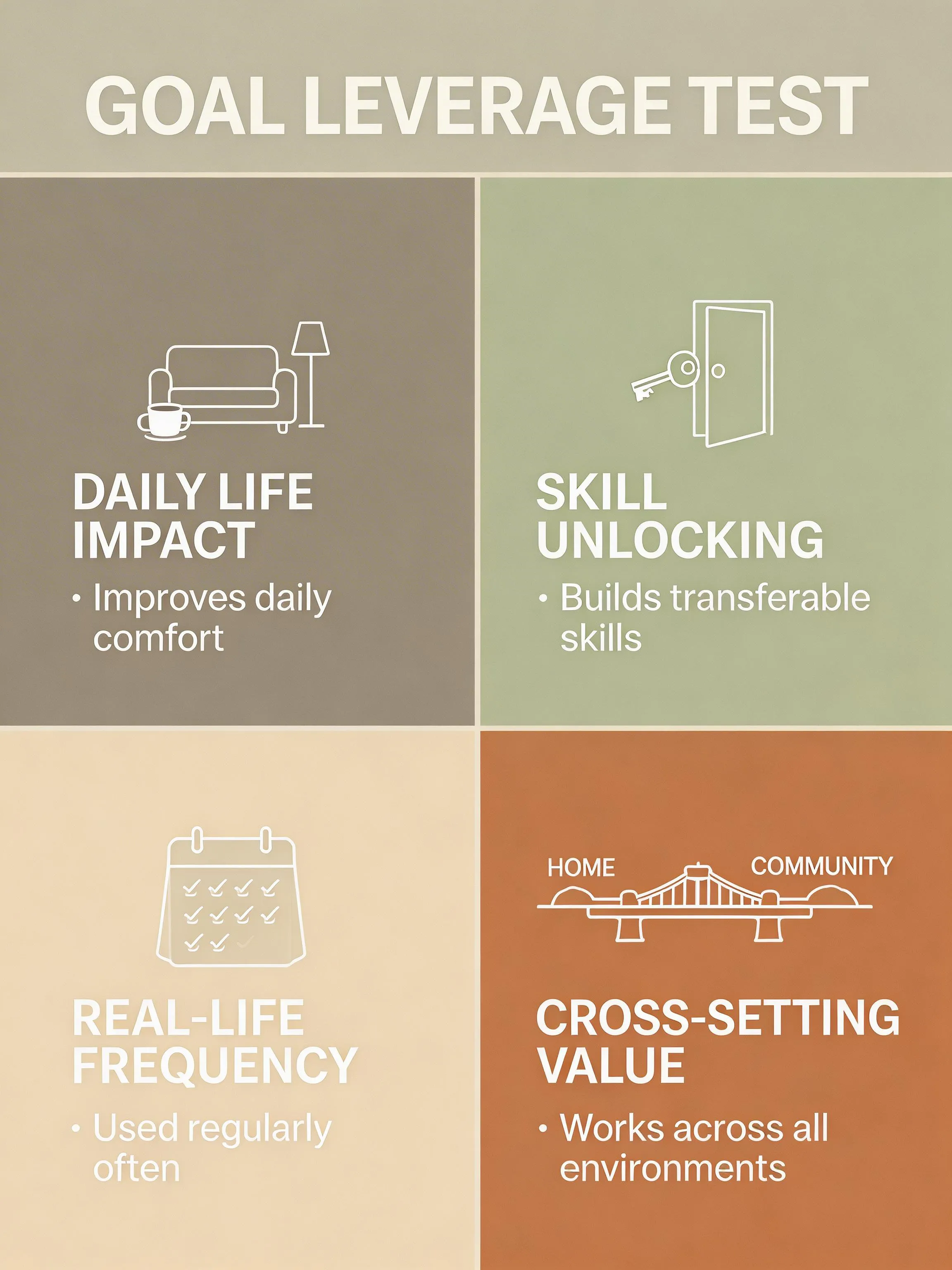
Start with the leverage test, strip away attractive-but-weak targets, and choose goals that change daily life and unlock more learning.
Planning Guides
Guides for choosing high-leverage goals, reducing prompt dependence, and building plans that create independence instead of more adult rescue.
This cluster is the bridge from overwhelmed information gathering to better sequencing and cleaner weekly plans.
Where To Start
Start with the leverage test, strip away attractive-but-weak targets, and choose goals that change daily life and unlock more learning.
Printable Tools
Turn a broad concern into an observable, measurable IEP goal tied to the student's present level, access needs, and real school participation.
Build a realistic life-skills sequence from current routines and meaningful outcomes instead of teaching a generic age-based list.
Print a simple visual schedule, choose the right level of detail, and teach the person how to check, finish, change, and ask for help.
Teach the schedule as a usable information system: check, do, mark finished, find what is next, and communicate when something changes.
All Planning Guides
When help becomes the real instruction, the child may look compliant while independence stays weak. Prompt dependence is often built, not inborn.
Not all goals are equal. The strongest targets are the ones that reduce friction now and unlock more learning later.
Prompted responses look like progress. But if the child cannot do it alone, with a different person, or in a different place, it may not be real learning yet.
A good goal does not just produce better session data. It makes an ordinary Tuesday look different.
Flashcards create a feeling of progress because performance is easy to see and count. But many of the skills they produce stay trapped at the table.
In-Depth Guides
Stop filling goal lists with attractive-sounding targets. Learn to choose goals that reduce daily friction, build independence, and create real momentum.
Independence is not a trait children either have or lack. It is a set of skills that can be taught — starting from whatever level your child is at right now.
Prompt dependence is usually built, not inborn. Learn how it develops, how to spot it early, and how to design teaching that creates independence instead of reliance.
In The Handbook
The full book covers planning across 3 dedicated chapters with detailed frameworks, decision tools, and planning sheets.
Related Appendices